%20(2).png)
Why Your Core Workouts Might Be Making Your Pelvic Floor Worse

Chronic low back pain. Tight hips. Leaking when you work out. Feeling like your glutes are always clenched. Pain with intimacy. Feeling disconnected from your core after pregnancy.
Most people think these problems are unrelated.
But many of them often stem from one thing: a dysfunctional core system.
We have all heard of “the core,” but do you really know what it is? Many people immediately think of the abdominal muscles, but it is so much more. The core is our entire trunk region — from the neck to the pelvic floor, front and back. We need all of these muscles to work together.
Your core stabilizes you, allows you to stand upright, houses and supports your organs, helps you breathe, and is where we create life. In many ways, it is the foundation of life itself.
The Canister System
When I think of the deep core, I think of a canister.
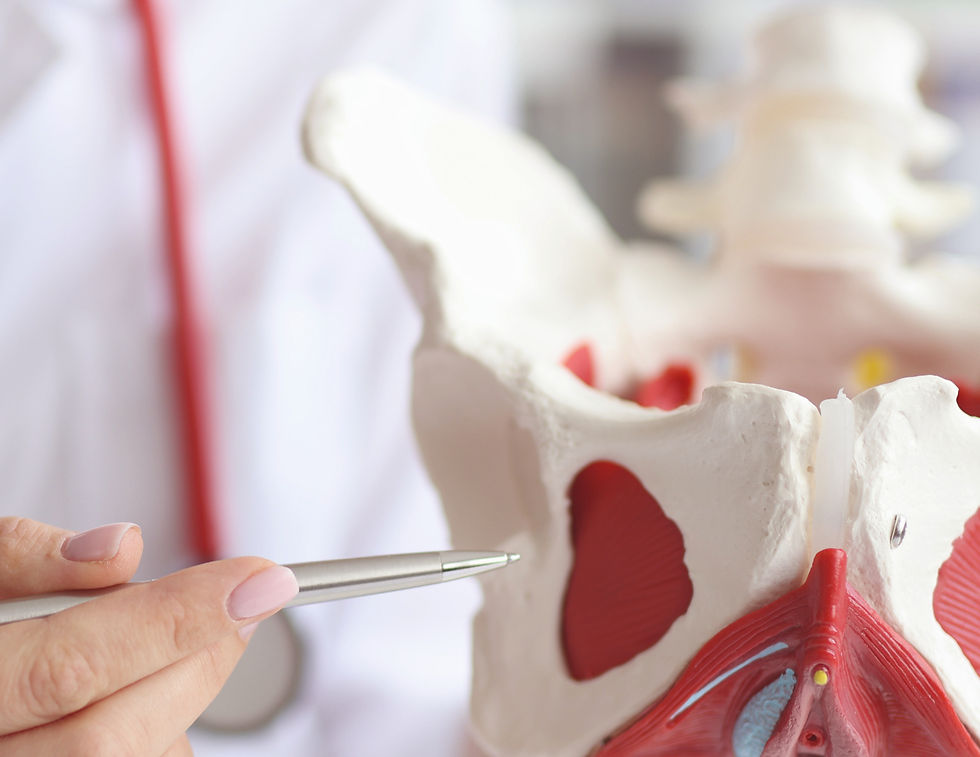
This “canister” is made up of the diaphragm, transverse abdominis, pelvic floor, and multifidus muscles. The diaphragm and pelvic floor form the top and bottom of the canister, while the transverse abdominis and multifidus create the walls.

This is where true stability should originate.
Unfortunately, for many people, it does not.
Sedentary lifestyles, stress, pregnancy, injuries, and even how we have been taught to exercise have greatly impacted the body’s ability to find and properly utilize this canister system. Instead, we often rely on our quadriceps, glutes, and superficial back muscles to create stability.
At first, these compensation patterns may not seem problematic. In fact, they often help the body function temporarily. But over time, these patterns create excessive tension, pressure, and imbalance throughout the system.
“Mom Butt” — A Compensation Pattern
These compensatory strategies often show up in what pop culture has jokingly named “mom butt.”
We have all seen it — a flat butt that is constantly squeezing and pushing forward. But the reality is that no mom or person is doing this intentionally. It is simply the body trying to create stability when the canister system is not functioning correctly.
So what is actually happening?
When there is poor connection to the transverse abdominis — our deep core support system — the body still needs to feel stable. To compensate, the pelvic floor begins gripping, the glutes squeeze excessively, and the low back extensor muscles tighten to hold the body upright.
This position places excessive pressure on the low back and pelvis, yet many people continue living, exercising, and functioning in this pattern every day.
The problem is that these compensations work…until they don’t.
This is often when women walk into my studio complaining of:
Chronic low back pain
Hip pain
Knee pain
Tight pelvic floors
Incontinence
Painful intercourse
Feeling disconnected from their core
The Problem With “Flatten Your Back”
When we reach this stage, we need to completely rethink how we approach core exercise.
There is one cue that many of us have heard over and over in fitness classes that can actually perpetuate these dysfunctional patterns:
“Flatten your back against the mat.”
We have all heard it.Most of us have done it.
But it may be time to stop.
At Posture Power Wellness, one of the first things we work on is unteaching the habit of aggressively flattening the spine during exercise.
When you forcefully flatten your back into the mat, several things can happen:
The lower core system shuts down
The hip flexors become inhibited
The pelvic floor begins gripping
The glutes over-contract
The lumbar spine becomes excessively flexed
This creates more compensation instead of balanced support.
In some cases, repeatedly loading the body in this position can even place excessive pressure on the lumbar discs and contribute to ongoing pain and dysfunction.
Why Neutral Pelvis Matters
Position matters.
Neutral pelvis should be the foundation of core training.
So what is neutral pelvis?
Neutral pelvis is the position where the pelvis, spine, diaphragm, and pelvic floor can work together most efficiently. It allows pressure to distribute evenly throughout the body instead of overloading the low back, hips, or pelvic floor.
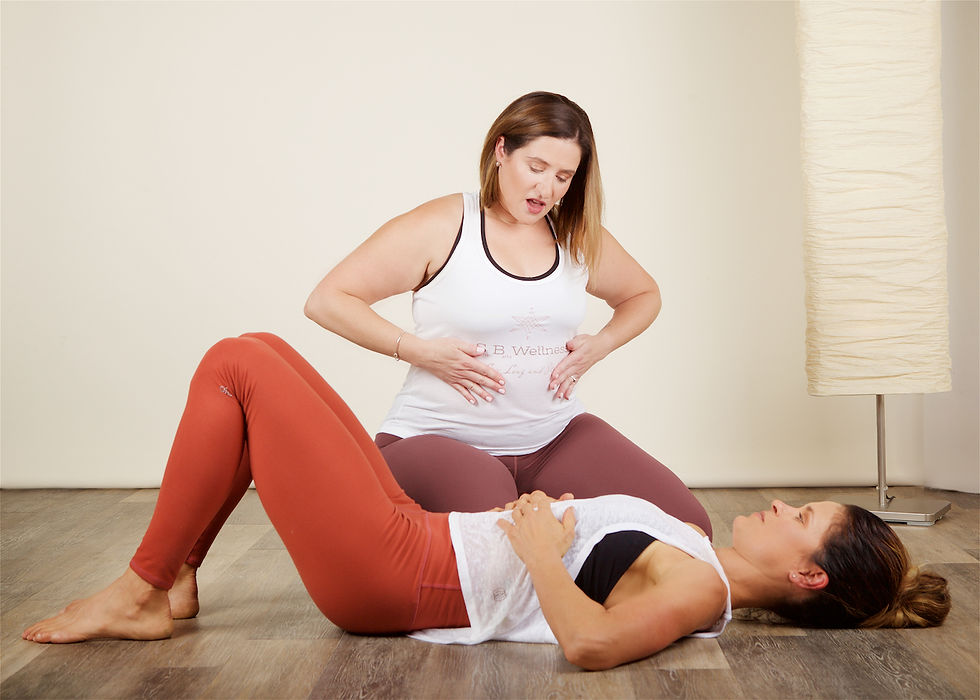
One of the best ways to begin finding neutral is to lie on your back and slowly tilt your pelvis forward and backward. Make the movement big at first and explore your full range of motion. Allow your body to loosen and soften as you move.
Then slowly begin finding the center point between those two extremes.
Focus on allowing your tailbone to feel heavy. Your tailbone sits at the top of your gluteal crease, or “butt crack.” Allow that area to gently rest into the mat without aggressively tucking or arching.
Another way to check for neutral is by making a diamond shape with your hands. Place your thumbs together and your index fingers together, then rest your hands on your pelvis with your thumbs near your navel and your fingers near your pubic bone.

Are your thumbs and fingers on the same plane?
If your fingers are higher, your pelvis is tilted backward
If your thumbs are higher, your pelvis is tilted forward
Use this as a tool to help find your neutral position.
Have you found it?
Great.
Now the next challenge is learning how to maintain that alignment while adding movement and abdominal challenge.
Because reconnecting to your core is not about getting flatter abs or “tightening” everything.
It is about creating support from the inside out so your body can move more efficiently, breathe better, reduce pain, and function the way it was designed to.
This is the foundation of how we teach movement at Posture Power Wellness through our therapist-led, pelvic floor-informed CoreRehab approach — both in studio and online.
Because when the canister works together, everything works better.
Ready to reconnect to your core?
Try a CoreRehab class in Denver or start your free 7-day online trial today.
Your body is not broken. It is simply asking for better support, better alingment, and a better connection to the system that was designed to hold you from the inside out.
Strong isn't about gripping harder.
It's about learning to move with support, balance, and confidence again.
-Shari Barta MS, OTR/L, CPT, NCPT, PCES
Founder, Posture Power Wellness

Comments