%20(2).png)
Pelvic Floor Disorders: What's Normal, What's Not, and What You Can Do About It

Leaking when you laugh. Pelvic pressure. Constipation. Pain with intimacy. Core weakness.
Millions of women experience these symptoms every day—but many don't realize they're all connected to the pelvic floor. More importantly, many don't realize that they can often be treated.
One day after class, a client stopped me and asked:
"Shari...what exactly is a pelvic floor disorder?"
It was such a simple question, but it made me realize something important. Those of us who work in this field use these words every day, yet most women have never actually been taught what the pelvic floor is or why it matters.
What Is a Pelvic Floor Disorder?
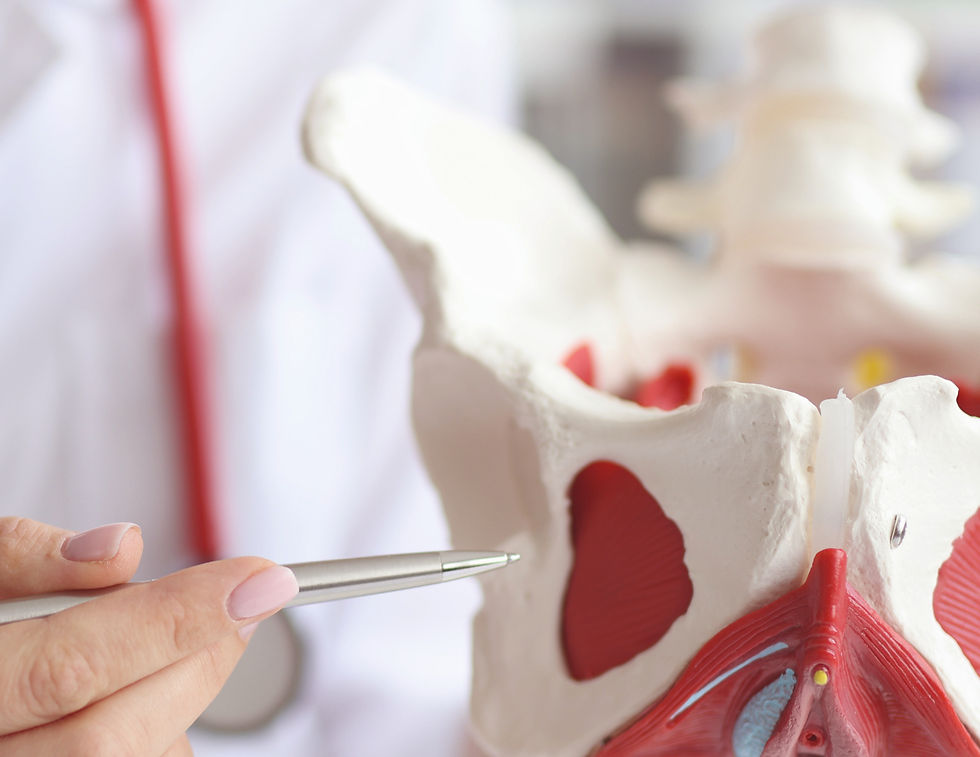
Pelvic floor disorders are an umbrella term that encompasses a wide range of conditions affecting the muscles, connective tissues, and nerves that support the bladder, bowel, reproductive organs, and core. These conditions can include urinary incontinence, fecal incontinence, pelvic organ prolapse, overactive bladder, urinary urgency and frequency, bladder and bowel emptying dysfunction, constipation, chronic pelvic pain, hypertonic (high-tone) pelvic floor dysfunction, pelvic floor weakness or poor coordination, painful intercourse (dyspareunia), pain with tampon use, pelvic girdle pain, coccyx (tailbone) pain, and abdominal wall dysfunction such as diastasis recti.
While there are many different types of pelvic floor disorders, some of the most common include urinary incontinence, pelvic organ prolapse, and hypertonic (high-tone) pelvic floor dysfunction. These conditions affect millions of women and can have a significant impact on quality of life—but with the right treatment and guidance, they are often highly manageable and, in many cases, significantly improved through conservative care.
When these muscles and tissues aren't functioning optimally, symptoms can range from leaking and pelvic pressure to constipation, pain, core weakness, and difficulty returning to the activities you love.
The important thing to remember is that pelvic floor disorders aren't just about weakness—they're about function.
A healthy pelvic floor isn't simply strong. It's able to contract when it needs to, relax when it should, and coordinate seamlessly with the rest of your body throughout everyday life.
Understanding the Different Types of Incontinence

Urinary incontinence simply means the involuntary leakage of urine, but not all leaking is the same. Understanding the different types can help you better recognize your symptoms and seek the right treatment.
Stress Incontinence
Leakage that occurs with coughing, sneezing, laughing, jumping, running, lifting, or exercise due to increased pressure on the bladder and pelvic floor.
Urge Incontinence
A sudden, overwhelming urge to urinate that is difficult to control, often resulting in leakage before reaching the bathroom.
Mixed Incontinence
A combination of both stress and urge incontinence—and one of the most common presentations in women.
Overflow Incontinence
Leakage that occurs when the bladder doesn't empty completely and becomes overfilled, often causing frequent dribbling or a constant feeling of incomplete emptying.
Functional Incontinence
Leakage caused by physical or cognitive barriers that make it difficult to reach the bathroom in time rather than a problem with the bladder itself.
Leaking is a symptom—not a diagnosis. Identifying the type of incontinence is the first step toward finding the most effective treatment.
Understanding Pelvic Organ Prolapse

Pelvic organ prolapse occurs when the muscles and connective tissues supporting the bladder, uterus, rectum, or vaginal walls become weakened or stretched, allowing one or more organs to descend into the vaginal canal.
Common symptoms may include:
Pelvic heaviness or pressure
A feeling that something is "falling out"
A visible or noticeable vaginal bulge
Difficulty emptying the bladder or bowels
Pressure that worsens with standing or exercise
Research suggests that up to 50% of women who have had a vaginal birth have some degree of prolapse on examination, although many have few or no symptoms.
It's also important to know that the grade of a prolapse doesn't always match how someone feels. Some women with a higher-grade prolapse have very few symptoms, while others with a mild prolapse may experience significant discomfort.
Hypertonic Pelvic Floor: When the Problem Isn't Weakness
When most people think about pelvic floor disorders, they think about weakness. But sometimes the problem is actually the opposite.
A hypertonic pelvic floor occurs when the pelvic floor muscles are too tight and unable to fully relax or coordinate effectively. Think of it like trying to use a muscle that's been clenched all day—it may feel "strong," but it isn't functioning well.
In fact, many people with a hypertonic pelvic floor don't feel weak at all—they feel tight, tense, or like they can't relax their muscles no matter how hard they try.
A hypertonic pelvic floor can contribute to symptoms such as:
Pelvic pain or pressure
Pain with intercourse or tampon insertion
Constipation or difficulty emptying your bowels
Difficulty starting or fully emptying your bladder
Frequent urination or urinary urgency
Low back, hip, or tailbone pain
Pain that worsens with stress or prolonged sitting
Contrary to popular belief, doing more Kegels isn't always the answer. In fact, for someone with a hypertonic pelvic floor, repeatedly tightening already overactive muscles can actually make symptoms worse.
The goal isn't simply to make the pelvic floor stronger—it's to help it become responsive, coordinated, and functional, able to contract when needed and relax when it's supposed to.
How Common Are Pelvic Floor Disorders?
If you've ever felt like you're the only one dealing with these symptoms, you're not alone. In fact, pelvic floor disorders are among the most common—and most under-discussed—health conditions affecting women today.
Research shows:
Nearly 50% of women within 10 years of giving birth have at least one pelvic floor disorder.
1 in 4 women over age 18 experience episodes of involuntary urine leakage.
Between 24% and 45% of women report some degree of urinary incontinence during their lifetime.
More than 423 million people worldwide live with urinary incontinence.
Up to 50% of women who have had a vaginal birth have some degree of pelvic organ prolapse on examination, although many have few or no symptoms.
About 1 in 5 women will undergo surgery for pelvic organ prolapse or urinary incontinence by age 80.
Chronic pelvic pain affects approximately 1 in 4 women, and studies estimate that 60–90% of women with chronic pelvic pain also have high-tone (hypertonic) pelvic floor dysfunction.
Despite how common these conditions are, fewer than one in three women seek treatment, often because they believe their symptoms are "normal" or feel embarrassed to discuss them.
There Is Hope
Perhaps one of the most surprising realities is that there is a multi-billion-dollar industry built around helping women manage pelvic floor symptoms with disposable products, yet millions of women are never told that effective conservative treatment exists.
Pads have their place.
But they shouldn't be the only option women know about.
Research consistently supports pelvic floor rehabilitation and corrective exercise as first-line treatment for many pelvic floor disorders, including urinary incontinence and pelvic organ prolapse. With the right guidance, many women experience significant improvements in symptoms, function, confidence, and quality of life.
The most important thing to remember is this: leaking, pelvic pressure, constipation, pain with intimacy, and core weakness may be common—but they are not normal.
These symptoms are not simply something you have to live with, and they are certainly not an inevitable part of motherhood or aging.
And if reading this article helped you realize that you've been living with symptoms you thought were "normal," know that you're not alone.
I hear stories like yours every single week in the studio.
Some women have been leaking for months.
Some for years.
Some have quietly worn pads every day, planned outings around bathrooms, or stopped exercising altogether because they assumed this was simply part of motherhood or getting older.
It doesn't have to be.
Women tell me they thought leaking was just part of having babies. They assumed pelvic pain was something they had to push through. They accepted constipation, pressure, or pain with intimacy as just another part of getting older.
The best part?
So many of them are relieved to discover that there is hope—and that they don't have to keep living this way.
Why I Created CoreRehab
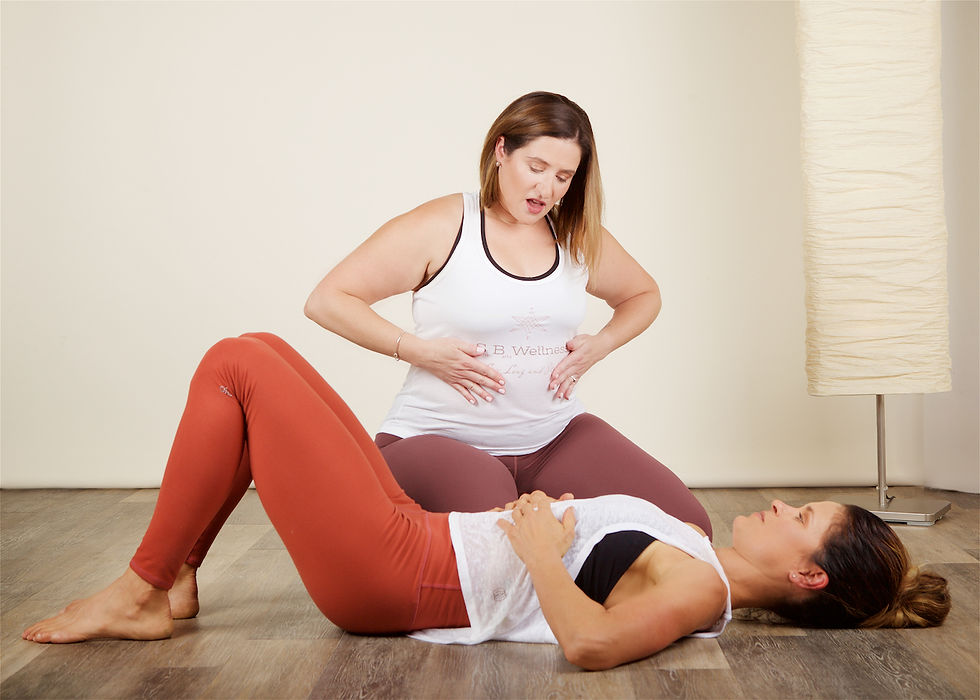
That's exactly why I created CoreRehab.
After years of working with women, I realized the answer wasn't another set of Kegels or simply trying to make muscles stronger. The answer was helping women understand how their bodies were designed to work—and giving them the tools to restore that function.
CoreRehab combines therapist-designed movement, breathing mechanics, alignment, pressure management, and intentional movement patterns to reconnect you with your body from the inside out.
It's not about exercising harder. It's about moving smarter.
It's about learning how to breathe well, move well, and trust your body again.
When your body starts working the way it was designed to work, symptoms often begin to improve. Many women experience remarkable changes in their confidence, movement, and quality of life—not because they learned to push harder, but because they finally learned to move better.
Every day I watch women walk into the studio feeling frustrated, disconnected, and convinced they simply have to live with their symptoms.
And every day I watch those same women rediscover confidence in their bodies.
Not because they're chasing perfection.
But because they're finally learning how to work with their bodies instead of fighting against them.
Common Does Not Mean Normal
Every woman deserves to understand her body.
Every woman deserves to move with confidence.
Every woman deserves to know that leaking, pain, pressure, and pelvic floor symptoms are common—but they are not normal.
And perhaps most importantly...
Every woman deserves to know that there is hope.
If there's one thing I hope you take away from this article, it's that your symptoms matter. Leaking, pain, pressure, constipation, or feeling disconnected from your core aren't simply things you have to accept because you've had babies or because you're getting older.
There is hope. There are answers. And there are people who are passionate about helping you get there.
Here's to moving with confidence, trusting your body again, and feeling strong from the inside out.
With gratitude,
Shari Barta, MS, OTR/L, CPT, NCPT, PCES
Founder, Posture Power Wellness
Creator of CoreRehab
If this resonates with you then check us out. We have classes in person in Denver, CO and online.
References
Handa VL, Blomquist JL, Knoepp LR, Hoskey KA, McDermott KC, Muñoz A. Pelvic Floor Disorders 5–10 Years After Vaginal or Cesarean Childbirth. Obstetrics & Gynecology. 2011;118(4):777-784.
Source for pelvic floor disorders after childbirth and increased risk of prolapse following vaginal delivery.
Tran LN, Puckett Y. Urinary Incontinence. StatPearls Publishing. National Center for Biotechnology Information (NCBI Bookshelf). Updated regularly.
Source for epidemiology, prevalence, definitions, and conservative management of urinary incontinence.
Mayo Clinic Health System. Is Urine Incontinence Normal for Women? November 7, 2022.
Source for patient education regarding prevalence, impact, and treatment of urinary incontinence.
Meister MR, et al. A Treatment Algorithm for High-Tone Pelvic Floor Dysfunction. Obstetrics & Gynecology. 2024.
Source for the estimate that 60–90% of women with chronic pelvic pain have high-tone (hypertonic) pelvic floor dysfunction and for current treatment recommendations.
Wu JM, Matthews CA, Conover MM, Pate V, Jonsson Funk M. Lifetime Risk of Stress Urinary Incontinence or Pelvic Organ Prolapse Surgery. Obstetrics & Gynecology. 2014.
Source for the widely cited statistic that approximately 1 in 5 women will undergo surgery for pelvic organ prolapse or urinary incontinence by age 80.
International Continence Society (ICS). Standardization of terminology and definitions for pelvic floor disorders and urinary incontinence.
Source for accepted terminology and definitions.
Cochrane Reviews and current international clinical practice guidelines on pelvic floor muscle training.
Supports pelvic floor rehabilitation as a first-line treatment for urinary incontinence and many cases of pelvic organ prolapse.


Comments