%20(2).png)
Why Kegels Aren’t Enough: A Better Approach to Pelvic Floor Health

Ladies and gentlemen—yes, you heard me—you have a pelvic floor too, and it can absolutely be affected. So why is it that Kegels are still the go-to recommendation for managing pelvic floor dysfunction? You go to the doctor, mention symptoms, and they casually say, “just do Kegels.”
The problem is, “Kegels” has become this ominous word. We’ve all heard it, but most people have no idea what it really is or how to do it correctly. And this is where we get into trouble. When done incorrectly—or at the wrong time—they can actually make your symptoms worse. Yes…worse.
Let me break this down.
A Kegel is the tightening of the pelvic floor muscles. Sounds simple, right? But here’s what most people don’t realize—many pelvic floors aren’t actually weak. In fact, a large number are already tight and overactive due to sedentary lifestyles, chronic stress, or constantly “holding it all together.” When you keep tightening an already tight system, you’re not building strength—you’re reinforcing dysfunction. This can lead to increased pain, difficulty with urination or bowel movements, discomfort with intimacy, and even continued leaking.
I don’t know why this is still the go-to. Kegels were popularized in 1948 by gynecologist Arnold Kegel, though pelvic floor work was described earlier in 1936 by Margaret Morris. At the time, this was groundbreaking. But we’ve learned so much more about the body since then, and it’s time to evolve the conversation.
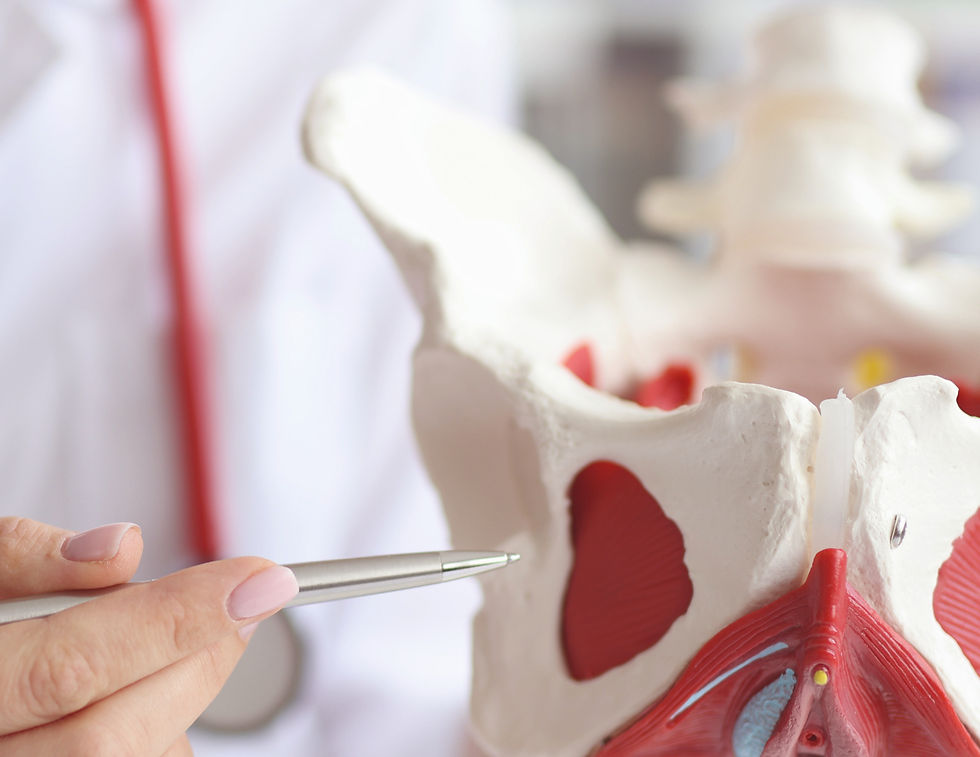
The truth is, our bodies need so much more than just tightening the pelvic floor. The pelvic floor is made up of a group of muscles arranged like a sling, connecting the pubic bone, tailbone, and sit bones. These muscles are responsible for supporting our pelvic organs, maintaining continence (both bladder and bowel), assisting with breathing, stabilizing the spine, and playing a major role in sexual function. These are just the day-to-day tasks—this system also has to adapt to movement, load, and even childbirth.
What’s even more important is that these muscles don’t work alone. They coordinate with your diaphragm, deep core (especially the transverse abdominis), back stabilizers, hips, and glutes. Kegels are just one very small piece of a much bigger puzzle.
So when are Kegels actually appropriate?
I recommend them when someone has no connection to their pelvic floor—when they truly don’t know how to find or activate those muscles. In that case, a Kegel becomes a tool for awareness, not a long-term solution.
If you are going to do a Kegel, here’s how to do it correctly.
Sit comfortably or lie down with knees bent and feet on the floor.
Focus on your pelvic floor—can you gently engage the muscles by pulling upward without moving your pelvis?
Then focus on fully relaxing the pelvic floor.
The goal is to feel the muscles tighten, gently lift, and then fully relax.
A healthy pelvic floor needs both contraction and complete relaxation. Most people skip that second part entirely.
Beyond the Kegel.
Now let’s talk about where the magic actually happens. One of the most effective ways to activate and retrain the pelvic floor is through your breath. Diaphragmatic breathing connects the pelvic floor with the diaphragm, deep core, and stabilizing muscles of the body. When these systems work together, you’re not just strengthening—you’re building true functional coordination.
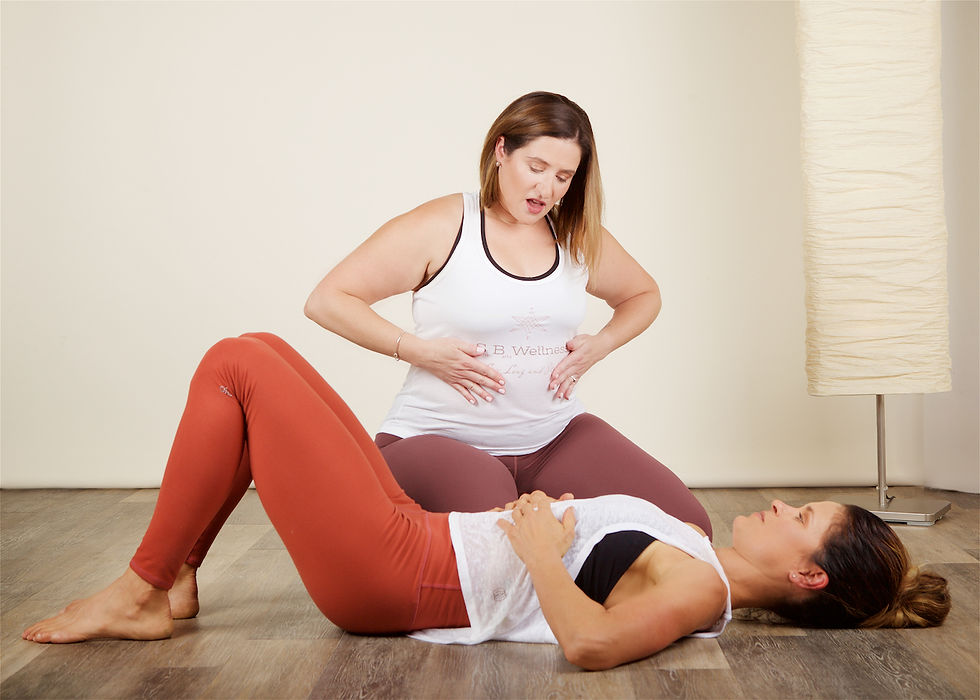
Here are the steps to make that magic happen:
I like to start lying down on my back with my knees bent and feet on the floor.
Check into your alignment—is your pelvis in neutral? It matters. Neutral posture will allow you to make a deeper connection.
Place your hands on your lower abdomen, with your fingertips resting on the pubic area.
Inhale through your nose, focusing on pulling the air down into your body. Let your stomach, ribs, back, lower core, and pelvic floor expand. I like to focus on where my fingers are and make it a target for where to send the breath.
Exhale, feeling all of these muscles gently tighten and lift upward. I like to think of the muscles helping to push the bad stuff out of us.
Repeat, focusing on deepening the breath and sending it lower each time.
During this, be mindful that you are maintaining neutral posture. It is common for people to gently tilt their pelvis in an attempt to deepen the work. This is a cheat and actually does the reverse. Stay in neutral—you will get more out of this.
This breathwork is powerful. It helps improve muscular coordination, deepens the mind-body connection, and allows the pelvic floor to both relax and contract naturally. That is what true muscle health looks like. When you restore this coordination, you’re training your body for real life—not just isolated muscle activation.
This approach works on the whole system. It focuses on how your body actually functions—breathing, moving, stabilizing, and adapting. Simply focusing on tightening one muscle has very limited carryover. As I said, there is a time and a place for the Kegel—it’s just not the end-all, be-all that it has been made out to be.
Let’s start looking at the whole body, the whole system, the whole person—because that’s how we live, and that’s how we should rehabilitate.
With strength from the inside out,
Shari Barta, MS, OTR/L, CPT, NCPT, PCES
Founder, Posture Power Wellness
Therapist-led. Pelvic floor informed. Real results.
Want to finally understand your core and feel it working the way it’s supposed to? Start with CoreRehab—our therapist-designed method that blends pelvic floor therapy with Pilates. Join us in-studio for that hands-on “aha” moment with your first class FREE (use code FREEBIE), or jump into our on-demand program with a 7-day free trial and start building strength from the inside out—on your time.


Comments